
Section 5 of 6
Community Programs & Partnerships
Extending Support Through Education and Collaboration
Why Dementia-Friendly Community Programming Matters
Public libraries are trusted community spaces where people gather to learn, connect, and access support. Dementia-friendly community programming does not require clinical expertise. What matters most is a welcoming environment, clear communication, and collaboration with organizations that provide subject matter expertise. Dementia care is a community effort. Families navigating cognitive changes often need more than information — they need connection, validation, and practical support.
Through educational events, social engagement opportunities, and evidence-informed programs, libraries can:
- Reduce isolation
- Increase awareness
- Promote brain health education
- Support caregiver well-being
- Connect families to trusted local resources
When libraries partner with aging-service and healthcare organizations, they expand capacity without placing additional burden on staff.
About This Section
This section provides:
- Tips for identifying and working with community partners through a case study
- Types of dementia-friendly programs
- Guidance for hosting support groups and memory cafés
- Overview of evidence-based programs
- Considerations for choosing the right program
- Key community partners in Florida
Partnership Case Study — Co-Hosting a Caregiver Workshop
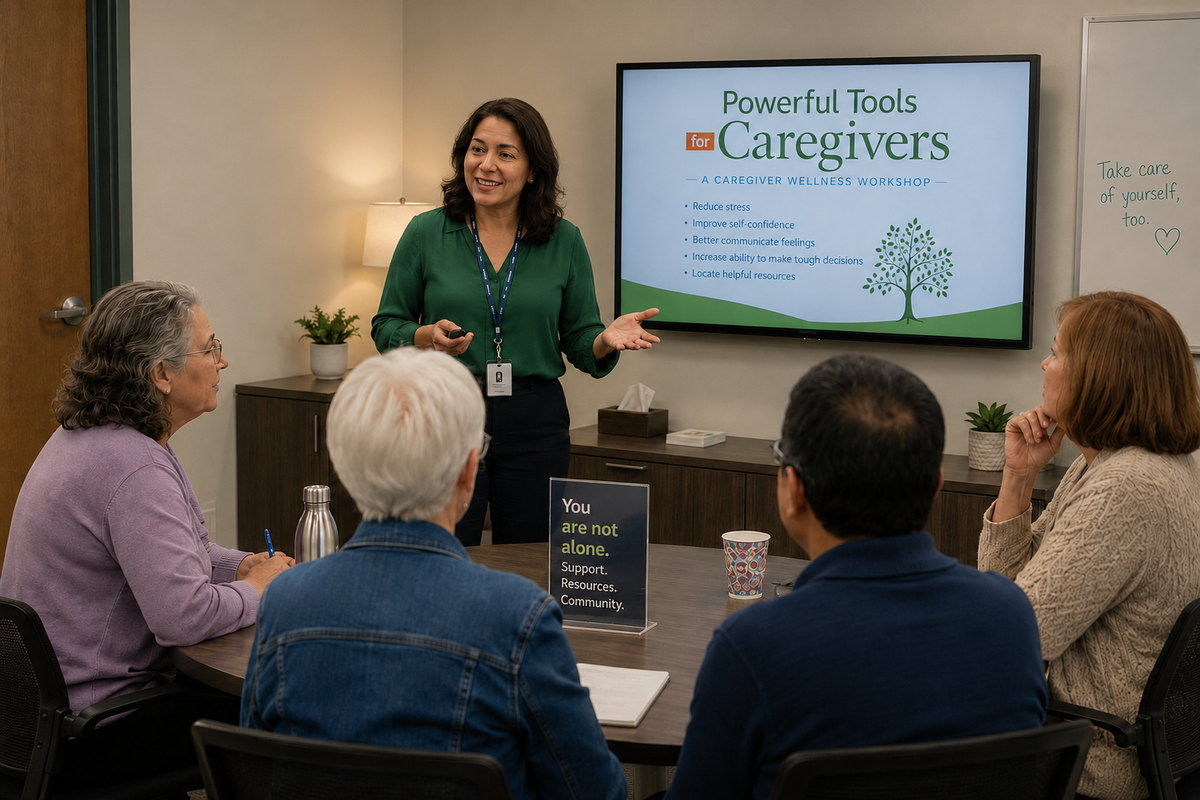
A mid-sized public library noticed an increase in caregivers requesting materials related to dementia, stress, and burnout. Recognizing a need beyond informational resources, library staff contacted their local Memory Disorder Clinic to explore partnership opportunities. Together, they selected an evidence-based caregiver wellness program, Powerful Tools for Caregivers. The clinic provided trained facilitators; the library provided meeting space, registration support, and community outreach. The six-week series was held in the early evening to accommodate working caregivers and was promoted through the library, clinic, primary care practices, and the senior center. Sessions focused on stress management, decision-making skills, and self-care planning, combined with peer discussion. The library ensured a welcoming space and made dementia-care materials available. By the end of the series, participants reported feeling less isolated and more confident in their caregiving role. Informal connections continued beyond the class, and the partnership led to ongoing programming.
What worked well
- Identified a demonstrated need
- Leveraged subject matter expertise through partnership
- Provided logistical and marketing support
- Created a safe, welcoming environment
- Sustained programming beyond a single event
Key takeaway
Strong partnerships allow libraries to expand community education and impact without assuming or providing clinical responsibility.
Types of Dementia-Friendly Programs
Libraries may implement programming based on staffing capacity, community needs, and available partners. Below are four common program types with simple definitions and basic requirements.
1. Support Groups
Definition: Support groups provide a safe, confidential space for care partners or individuals living with early-stage memory changes to share experiences and reduce isolation. These are typically recurring meetings held monthly.
Elements needed:
- Free meeting space
- Comfortable seating
- Trained facilitator(s) or partner organization
- Simple group guidelines (e.g., confidentiality, respectful listening)
- Resource handouts
Note: Libraries typically host these groups in partnership with organizations such as Memory Disorder Clinics or Area Agencies on Aging.
2. Memory Cafés
Definition: A memory café is an informal social gathering for persons living with dementia and their care partners. The focus is connection and enjoyment, not dementia education. Memory cafés are often recurring monthly events.
Elements needed:
- Welcoming, easy-to-navigate space
- Clear signage
- Light refreshments (if permitted)
- Simple structured activities (e.g., music, art, reminiscence prompts)
- Volunteers or staff to greet participants

Hialeah Public Library — Café de los Recuerdos
The Hialeah Public Library offers a traveling memory café called Café de los Recuerdos at senior living communities and congregate meal sites. Themes vary monthly, such as holiday reminiscence. The program averages 15 participants and is paired with a traveling lending library. This model expands access by meeting participants where they are.
Facilitator Guides and Toolkits
The following externally published guides offer additional detail on planning and facilitating support groups and memory cafés:
- IPHA Support Groups for Dementia Caregivers Initiative — Resource Inventory (CHaSCI, Illinois) — A collection of caregiver education, support group resources, and implementation guides.
- Memory Café Startup Guide (Mayo Clinic Memory Disorder Clinic, PDF) — Developed as part of a multi-stakeholder coalition partnership; covers how to run a memory café.
- Memory Café Guide to Leadership and Other Meaningful Roles for People Living with Dementia (Dementia Action Alliance, PDF) — Strategies for involving people living with dementia as active contributors in memory cafés and other opportunities.
3. General Education Presentations
Definition: Educational programs increase community awareness of dementia, brain health, caregiving, and aging-related topics. Education can be empowering. It can help improve early recognition of cognitive changes, reduce stigma, and help connect community members with supportive resources. These may be one-time presentations or recurring speaker series.
Elements needed:
- Guest speakers or pre-recorded webinars
- Presentation space or virtual platform
- Printed referral materials and brochures
- Basic audiovisual equipment
Educational programming encourages early recognition of cognitive changes and promotes help-seeking behavior.
4. Evidence-Based Programs
Definition: Evidence-based programs are structured interventions shown to improve care partner well-being, coping skills, or older adult health outcomes. Many are eligible for funding under the Older Americans Act Title III-D. Libraries generally host these programs in partnership with licensed or trained facilitators.
Additional information about evidence-based healthy aging programs can be found through the National Council on Aging (NCOA), which maintains a directory of more than 70 nationally recognized programs. Some of these programs may be eligible for funding or reimbursement through partnerships with Area Agencies on Aging or Area Health Education Centers.
| Program | Focus |
|---|---|
| Powerful Tools for Caregivers | Caregiver-focused |
| Savvy Caregiver | Caregiver-focused |
| Matter of Balance | Physical health / falls prevention |
| Enhance® Fitness | Physical health / falls prevention |
| Chronic Disease Self-Management | Physical health |
| Program to Encourage Active, Rewarding Lives (PEARLS) | Mental health |
Elements needed:
- Certified facilitators
- Program manuals
- Multi-session scheduling
- Registration system
- Partner organization support
Additional Programming Ideas
Libraries may also consider:
- Informational fairs featuring local aging-service vendors
- Participation in senior center or health department wellness events to promote dementia-friendly library resources and programs
- Empathy-building activities such as Virtual Dementia Tours facilitated by certified trainers
- Technology classes designed for older adults
Programs may start small and grow over time.
Choosing the Right Program
When implementing community programming, libraries are encouraged to begin with manageable initiatives. Even a single recurring memory café or educational session can make a meaningful impact.
Consider:
- Staff capacity
- Available partners
- Community demand
- Space limitations
- Marketing resources
Partnerships reduce burden and increase sustainability.
Community Partnerships
Why Partnerships Matter
Strong partnerships enhance program quality and reach. The following organizations commonly support older adults and care partners across Florida, helping them access services that promote their independence, safety, and quality of life. Libraries may collaborate with these partners to expand community support and resource awareness.
Below are common Florida-based partners and the services they provide.
Area Agencies on Aging (AAAs)
AAAs connect older adults and care partners to essential supports. The Department of Elder Affairs administers programs and services for elders across the state of Florida through 11 AAAs, which operate as Aging and Disability Resource Centers.
How AAAs can help:
- Information and referrals for meals, transportation, home care, respite, and other services
- Assistance navigating Medicare, Medicaid, and long-term care options
- Support for care partners through dementia-related training, counseling, and resources
- Education and emotional support for care partners and older adults
Contact: Call the Elder Helpline 1-800-96-ELDER (800-963-5337) to begin accessing services.
Some publicly funded programs have eligibility criteria based on a person’s ability to carry out daily activities, cognitive needs, and income level.
Memory Disorder Clinics
Florida’s regional Memory Disorder Clinics are funded in part by the Florida Department of Elder Affairs. Florida has 17 clinics providing:
- Comprehensive evaluations
- Care planning
- Education for communities and families
- Referral services
These clinics are valuable educational partners for libraries, strengthening community education and outreach efforts and improving patron referral pathways.
Dementia Care and Cure Initiative (DCCI)
Led by the Florida Department of Elder Affairs, DCCI promotes dementia-friendly communities throughout Florida by providing public and professional education, awareness activities for early detection, and care partner support. Libraries may connect with local task forces for collaborative programming.
Contact: DCCI@elderaffairs.org
Alzheimer’s Association
The Alzheimer’s Association is a national nonprofit organization dedicated to advancing research, education, and support for people living with Alzheimer’s disease and other dementias. Resources include:
- Free education and support programs
- Connection to research opportunities
- Professional training
- 24/7 Helpline (800-272-3900) offering disease education and personalized care consultation for families and professionals
Area Health Education Centers (AHEC)
AHECs are regional centers that deliver evidence-based classes and community health education. Locate your regional center through the Florida AHEC Network’s interactive map.
Senior Centers
Senior Centers are community-based hubs that offer recreational programs, services, resource connection, and social opportunities for older adults. Many provide wellness activities, educational classes, meals, caregiver support, and referrals to local aging resources. Contact your local government entity for information about your local senior center.
Aging-Service Nonprofits
Dementia-support nonprofits and programs focus on supporting individuals living with dementia and their care partners. These organizations often provide free or low-cost services designed to reduce isolation, increase understanding of dementia, and help families navigate care options.
Common services may include:
- Support groups
- Respite and social engagement opportunities
- Caregiver workshops
- Care coaching and consultation
- Resource navigation and referral services
Libraries may collaborate with these organizations to host educational programs, support groups, or community events that increase awareness and access to dementia-related resources.
Lee County Library System
Libraries across Florida are building partnerships to support dementia education and care partner resources. The Lee County Library System offers one example of how libraries can collaborate with community organizations to expand programming and support.
The Lee County Library System partners with local organizations to offer dementia-related educational programs and caregiver resources, such as their Empowered Caregiver series hosted at multiple library locations. The library collaborates with Lee Health Memory Disorder Clinic and the Area Agency on Aging of Southwest Florida to offer virtual programs and dementia sensitivity training. Additional partners such as the Dubin Center provide one-on-one caregiver consultations. These partnerships bridge the gap between information and action, connecting patrons to services, support, and care beyond the library.
Community Programming Checklist
Does your library:
Download Checklist (fillable PDF)
From knowledge to action
Start with one partnership conversation. Identify a single program type that aligns with your community’s needs and staff capacity. Build gradually over time. Community programming helps libraries connect people to resources, support, and each other. Even small efforts can create meaningful impact.