

Section 3 of 6
Creating a Dementia-Friendly Environment
Why the Physical Environment Matters
Creating a dementia-friendly physical environment in libraries is essential for ensuring that all patrons feel safe, supported, and empowered to use library services. People living with dementia often experience challenges such as disorientation, difficulty with wayfinding, and heightened sensitivity to noise, glare, and clutter. These factors can make navigating public spaces overwhelming and stressful.
By thoughtfully designing library spaces with clear signage, consistent lighting, safe flooring, and comfortable seating, libraries can reduce confusion and anxiety, promote independence, and foster a welcoming atmosphere for both people living with dementia and their care partners. These environmental elements not only improve accessibility but also demonstrate a commitment to community wellbeing and participation.
Improving the Physical Environment
Accessibility & Navigation
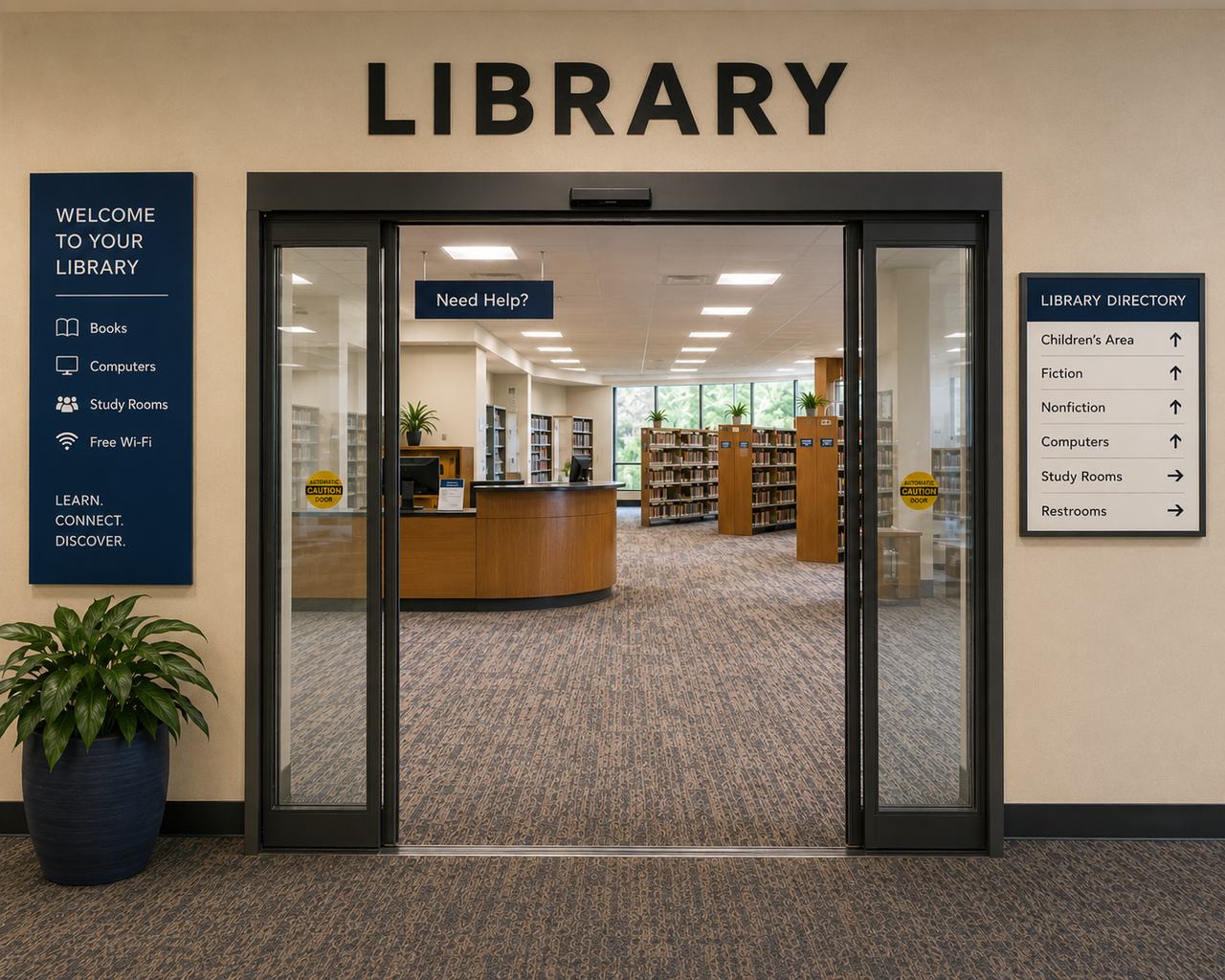
Why it matters: People living with dementia often experience mobility challenges and may feel anxious in crowded or cluttered spaces. Ensuring easy access and clear navigation reduces stress and supports independence.
Best Practices
- Install self-opening doors for effortless entry and exit
- Maintain wide aisles and uncluttered pathways for safe movement
- Use stable shelving and keep sightlines clear to entrances and service desks
- Avoid obstacles or furniture that could cause confusion or hazards
- Install grab bars in bathrooms and handrails on staircases
- Assess outside entrances and sidewalks for fall hazards such as uneven concrete
Descriptive Signage
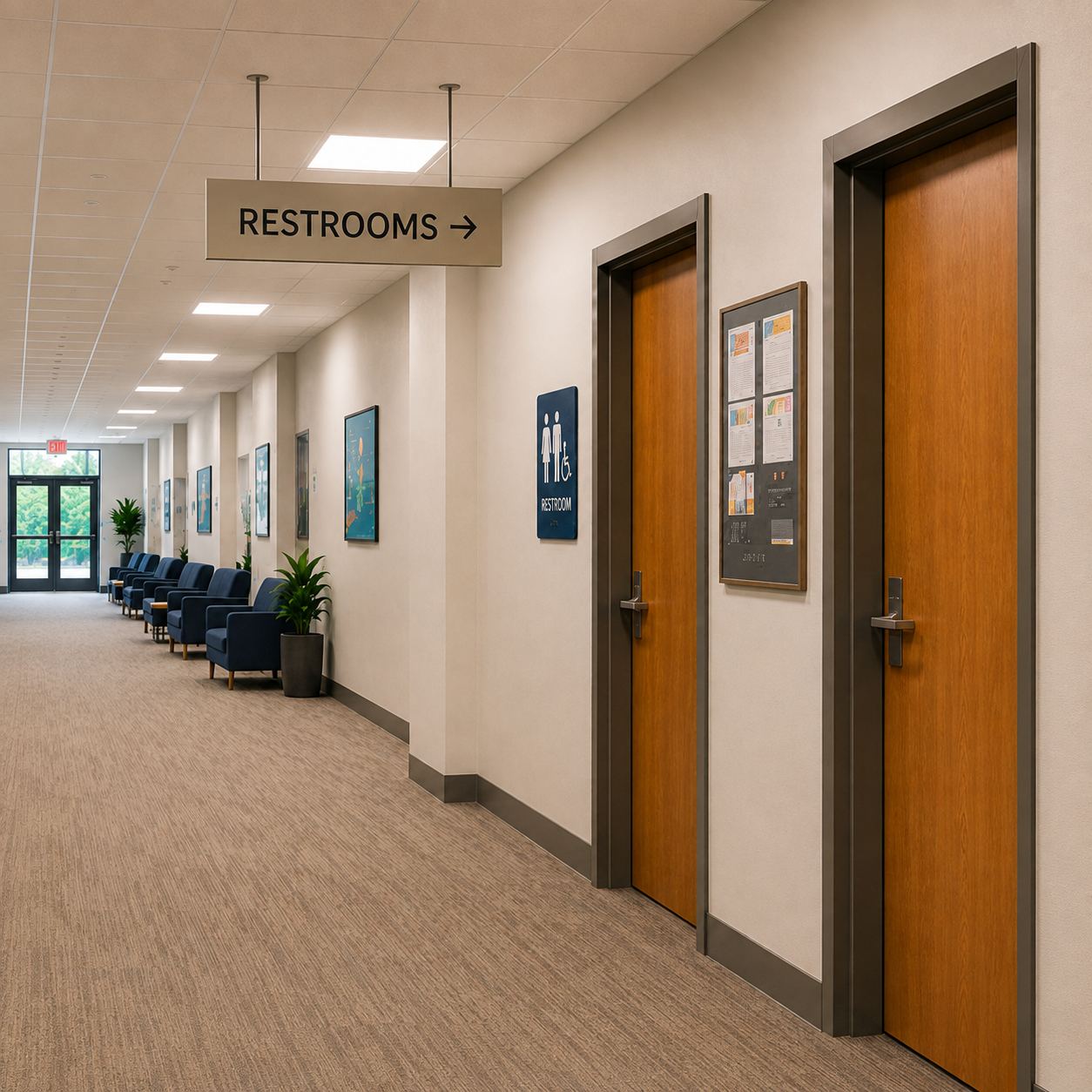
Why it matters: People living with dementia often experience confusion and difficulty with wayfinding. Clear, consistent signage reduces stress and promotes independence.
Best Practices
- Use large-print, high-contrast signs with simple words and familiar icons (e.g., restrooms, exits, check-out)
- Place signs at eye level and ensure consistency throughout the building
- Include “You Are Here” maps and color-coded zones for easy navigation
Lighting & Flooring
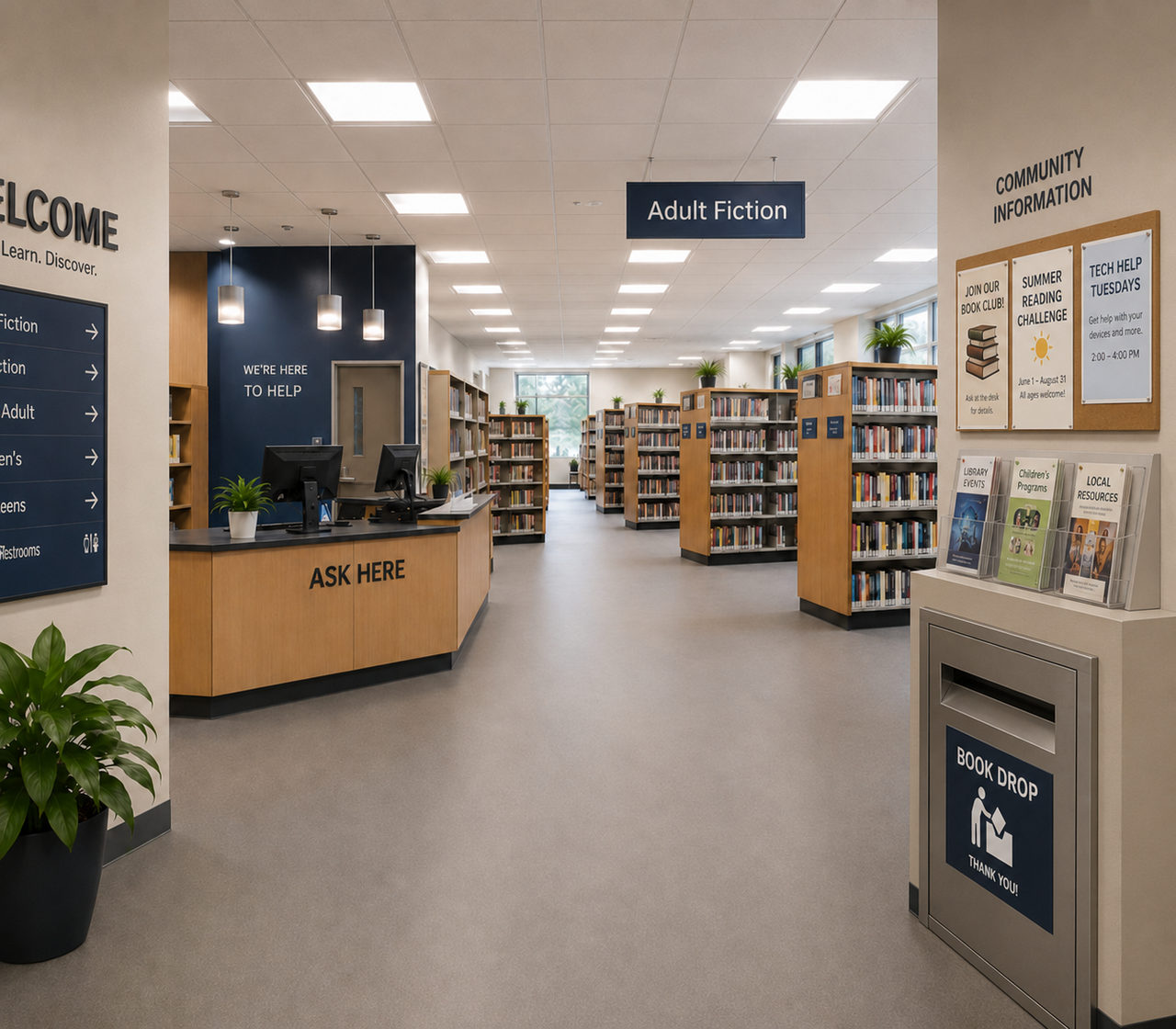
Why it matters: Glare, shadows, and patterned floors can cause disorientation and increase fall risk.
Best Practices
- Maintain bright, even lighting throughout the library, especially in hallways and restrooms
- Use matte finishes on slip-resistant floors; avoid shiny or patterned surfaces
- Mark stairs and ramps with high-contrast tape or paint
Comfortable Seating & Rest Areas
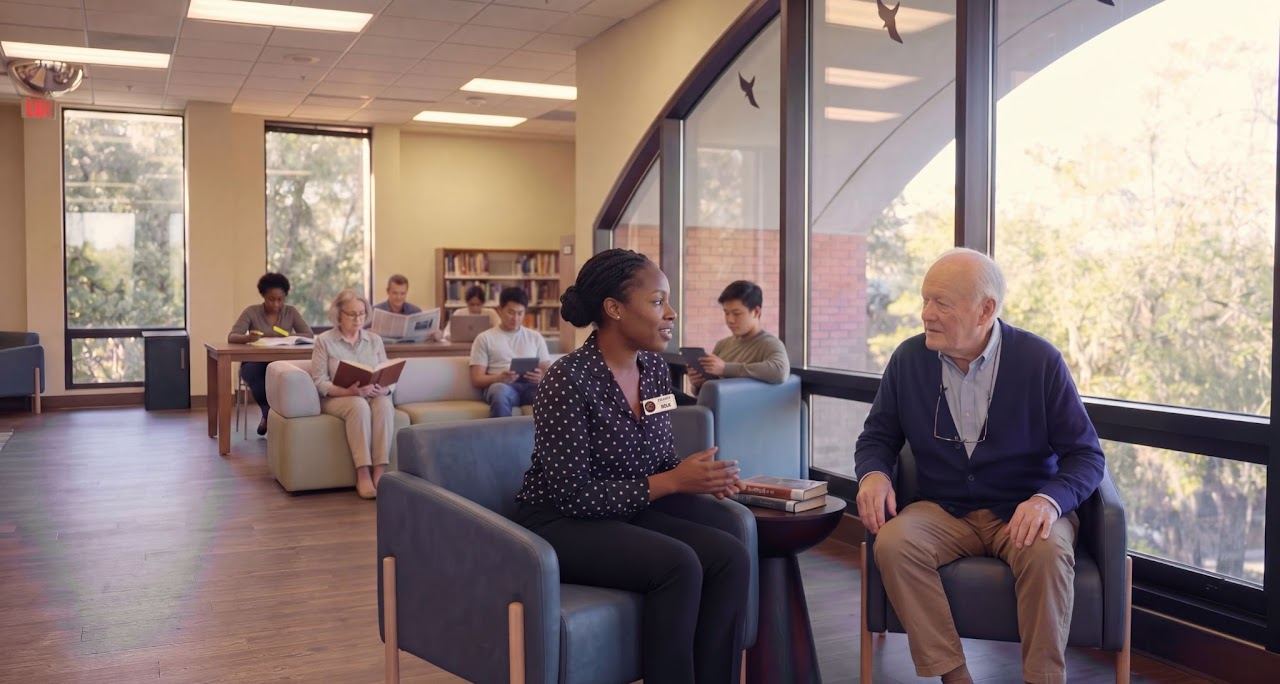
Why it matters: People living with dementia may tire easily and need safe, stable seating options.
Best Practices
- Provide sturdy chairs with armrests in reading areas, near entrances, and along pathways
- Include quiet zones for those who need a calm environment
- Offer family restrooms with grab bars for care partners assisting patrons
Staff Support & Assistance
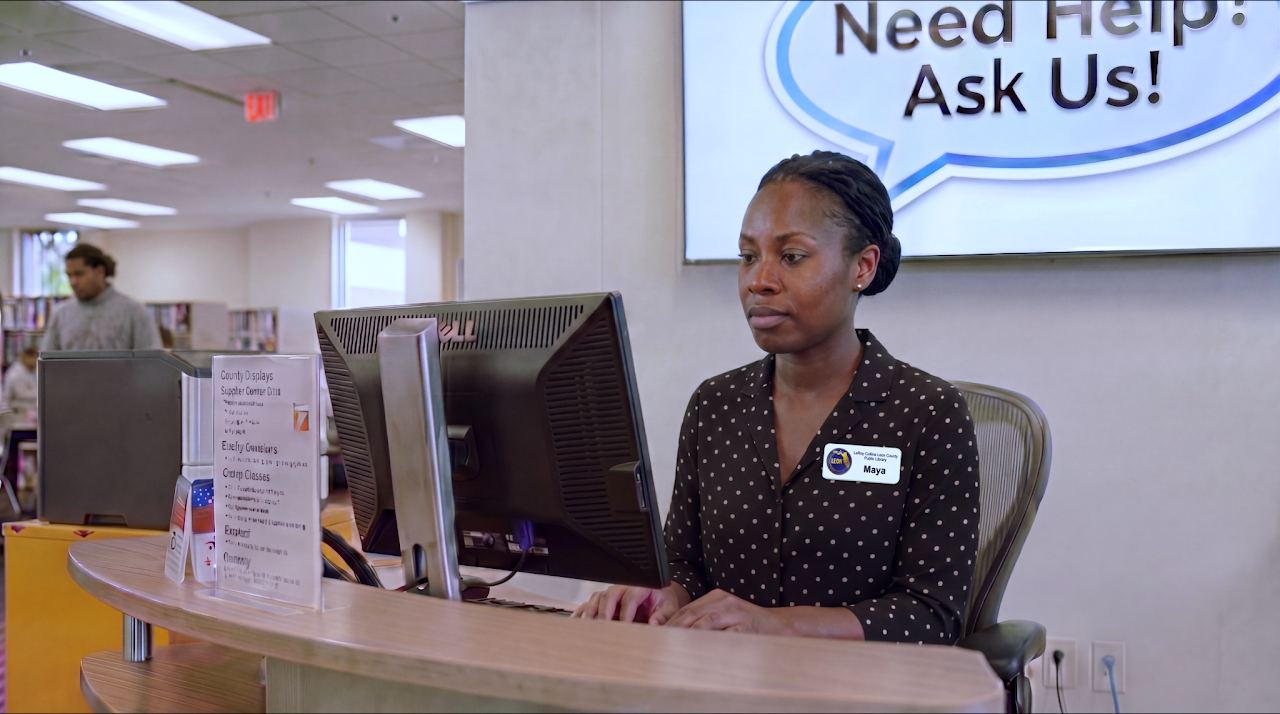
Why it matters: A dementia-friendly environment is not only about physical design — it also depends on staff being approachable and easy to identify.
Best Practices
- Ensure staff visibility with large, readable name badges or lanyards
- Provide easy ways to get help, such as clearly marked service desks and proactive greetings
- Train staff in dementia awareness so they can respond with patience and empathy
- Consider help points or call buttons in larger libraries for quick assistance
Case Study — A Visit to the Library
Meet James, a retired teacher living with early-stage dementia. James enjoys reading and visiting his local library, but navigating public spaces can sometimes feel overwhelming. Today, he decides to visit the library to borrow a new mystery novel, bringing along his cane for support
Arrival and Wayfinding: As James approaches the entrance, self-opening doors make it easy for James to step inside without juggling his cane and pushing open the heavy door. Inside, he notices large, high-contrast signs at eye level point toward the circulation desk and genre section where he hopes to find his favorite mystery novels. These clear markers help him feel confident about where to go next.
Navigating the Space: The library’s wide aisles and uncluttered pathways allow James to move freely with his cane without worrying about bumping into obstacles. Bright, even lighting reduces shadows, and the matte flooring prevents glare that could otherwise confuse him. These small details make a big difference in his comfort and safety.
Taking a Break: After browsing, James feels tired. He spots a sturdy chair with armrests near the reading area. Having seating in easy-to-reach locations helps him recharge without stress.
Getting Assistance: When James is ready to check out his book, he feels unsure about the process. Fortunately, a staff member wearing a large, readable name badge greets him warmly and offers help. This proactive support reassures James and makes the experience positive.
The outcome: James leaves the library feeling accomplished and valued. While he still faces challenges, such as occasional confusion when signage is missing, thoughtful design elements and attentive staff make his visit enjoyable and safe. These dementia-friendly practices transform the library into a welcoming space for everyone.
Case Study — A Visit with a Care Partner
Meet Maria and her husband David. David is living with moderate dementia and Maria is his primary care partner. They visit their local library because Maria heard about a special dementia-friendly section with activity kits for David and books for care partners.
Arrival and First Impressions: Self-opening doors make it easy for Maria to guide David inside. Large, high-contrast signs help Maria spot the information desk.
Navigating to the Dementia Section: Wide aisles allow Maria to walk beside David comfortably. Bright, even lighting and matte, slip-resistant flooring reduce glare and prevent falls. They follow clear signage to the dementia-friendly section.
Taking a Break: David begins to feel slightly overwhelmed and agitated. Maria guides him to a quiet space with sturdy chairs nearby. While David settles, Maria browses the resources — finding activity kits and books for care partners.
Using the Family Restroom: Maria is relieved to find a family restroom with grab bars, making it easier to assist David privately and safely.
Getting Assistance: A staff member with a large, readable name badge approaches, explains the activity kits, and offers to help check them out.
The outcome: Maria and David leave feeling grateful. The combination of clear signage, accessible pathways, slip-resistant flooring, quiet spaces, a family restroom, and helpful staff made their visit positive and manageable.
Dementia-Friendly Environmental Checklist
This checklist serves as a practical tool for libraries to evaluate how well their physical environment supports patrons living with dementia and their care partners.